Vous êtes ici : Accueil


Surveillance Etna
 
Recherche


ERUPTION DE L'ETNA

24 Avril 2012


On April 24 2012, the new SE Crater of Etna produced its 25th paroxysmal eruptive episode of the series initiated on January 12 2011 (7th in 2012), after a 11.5 days quiet period, similar to the previous inter-eruption interval. Lava fountains were again produced in the night, feeding an ash and lapilli plume. See the INGV Catania website for more details on the activity.
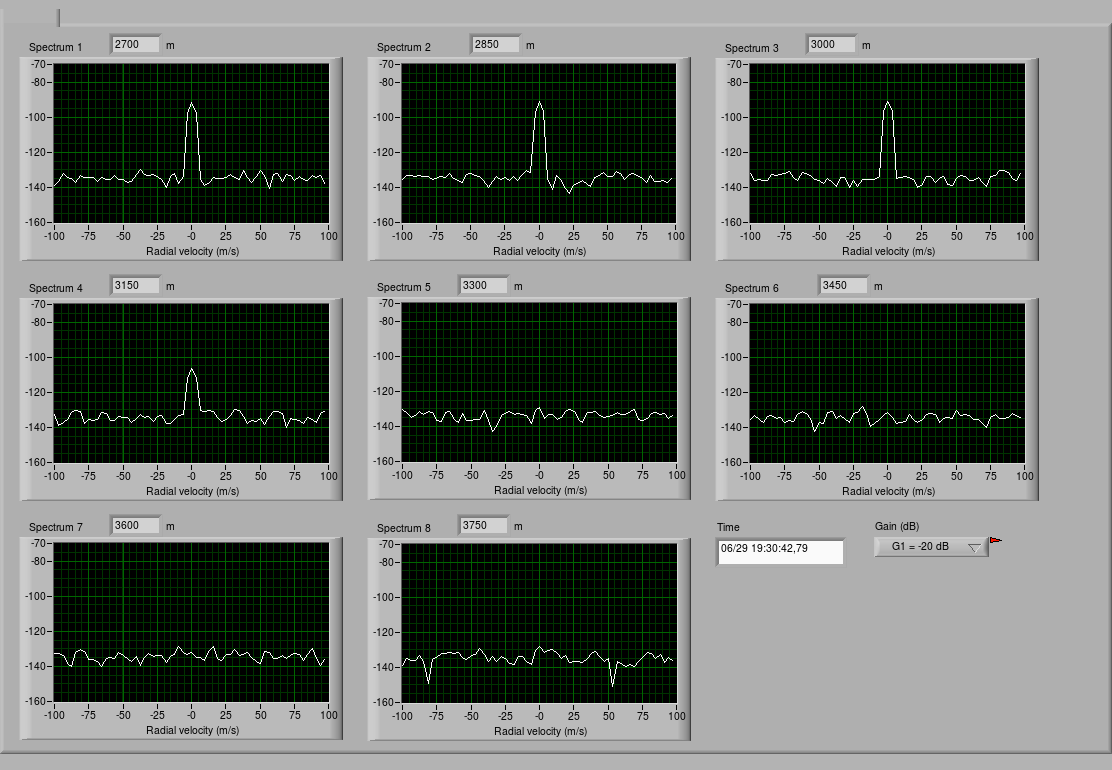
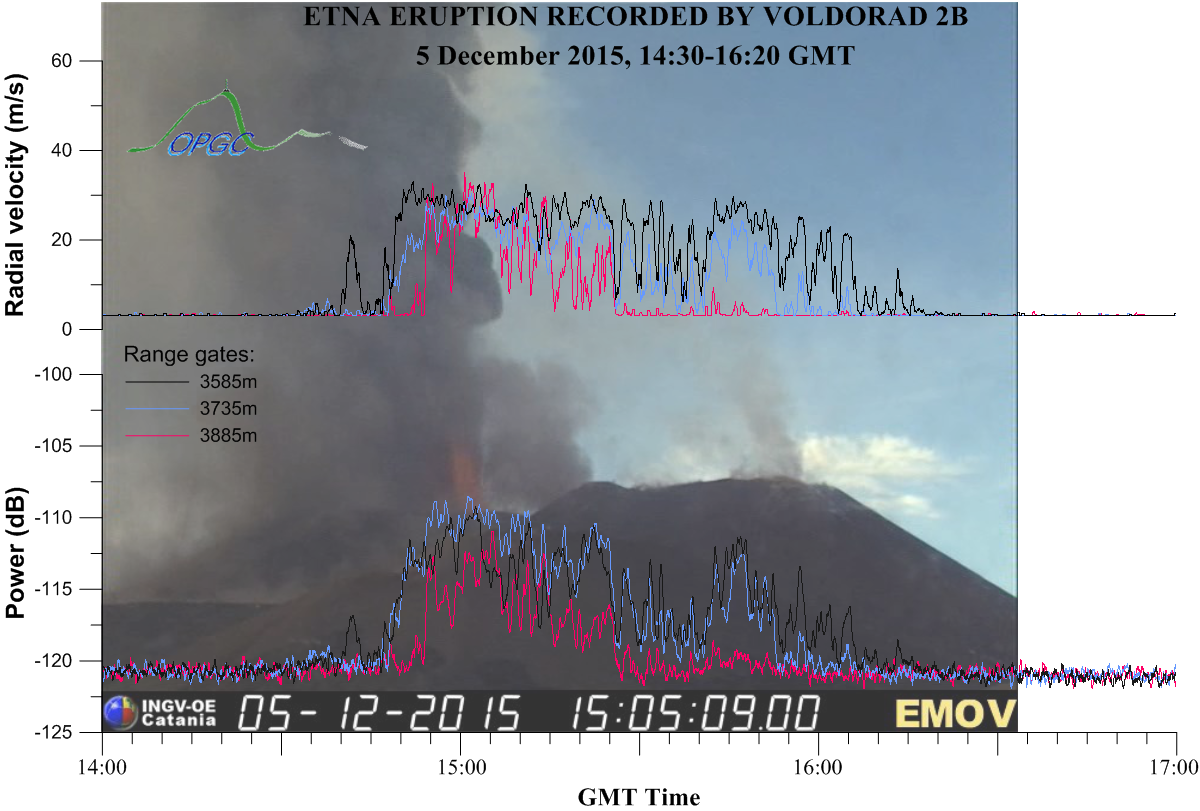
The OPGC radar VOLDORAD 2B, located at La Montagnola and operated jointly with the INGV Catania, was able to detect echoes from the fountain-fed ash and lapilli plume in up to all (11) range gates (3135m - 4635m). A very weak echo, likely caused by emission of dilute ash, was first recorded from about 23:40 GMT on April 23 in the 3285 m range gate, maintaining at very low level until 01:05 GMT on April 24. At this time, velocities and backscattered power measured in the 3135 and 3285 m bins progressively increased. Sligthly before 01:30 the increase in signals amplitude, and thus of the activity, became more pronounced and at 01:35 the plume was detected all range gates (11) indicating the beginning of the lava fountain paroxysm. This also suggests a strong wind component to the North stretching the plume over at least 1650m at the beam elevation (3-4 km a.s.l.). The echo power maintained at a high level in all sounded volumes for 20 minutes (until 01:55), when particle radial velocities peaked at nearly 60 m/s (certainly helped by strong winds). Then, the echo power started to decrease progressively in all gates until about 02:15 when signals disappeared from the gates beyond 3585 m. This certainly marked the end of the lava fountains feeding the plume. Signals in closer range gates were back to background level at 02:25.


Service d'Observation
des radars Doppler Volcanologiques

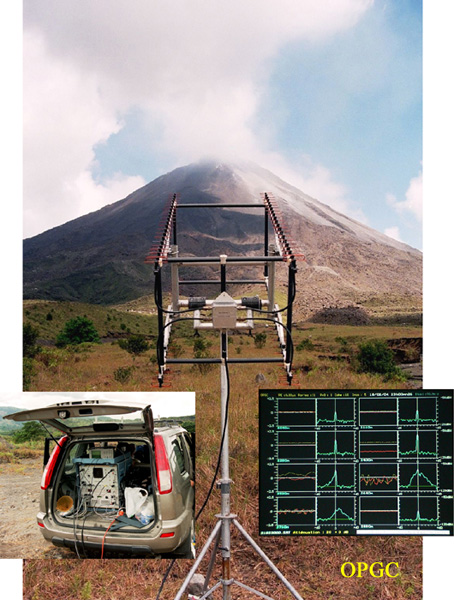
Antenne radar à 2.6 km à l'ouest du volcan Arenal (2650 m, Costa Rica)

VOLDORAD (Volcano Doppler Radar) est le Service d'Observation utilisant les radars Doppler volcanologiques transportables conçus à l´Observatoire de Physique du Globe de Clermont-Ferrand spécifiquement pour l´étude et la surveillance des éruptions volcaniques explosives.
Adaptés des radars UHF profileurs de vent, ils constituent un outil de télédétection de pointe dans l´étude et la surveillance des jets de lave et panaches de cendres, où les réflecteurs dominants sont les particules de lave propulsées au-dessus de l´évent par la violente expansion des gaz magmatiques sous pression.
L´intérêt majeur des radars Doppler réside dans leur capacitÉ à sonder l´intérieur des jets/panaches volcaniques et dans le suivi temps-réel et à la source des vitesses d´émission et de la réflectivité des ejecta et, par inversion, la quantification des flux de magma et de gaz émis.


Plus d'informations


Mentions légales